If you're researching gym ownership, the terms "chain," "franchise," and "corporate" can blur together fast. Each franchise model works differently, and the one you choose shapes everything from your startup costs to your daily workload. This guide breaks down the real differences so you can decide which path fits your goals, your capital, and your lifestyle.
You'll learn what each term actually means, how the economics compare, and why one ownership structure can look radically different from another even under the same brand name.
Key Takeaways
- A gym chain is any brand with multiple locations. Those locations can be franchised (owned by independent operators) or corporate (owned by the parent company). "Chain" describes size, while "franchise" and "corporate" describe ownership.
- A gym franchise is a legal license: you pay an initial franchise fee and ongoing royalties to run a proven business model, and the FTC requires the franchisor to hand you a 23-item disclosure document before you commit.
- Corporate gyms are owned and run by the parent company's employees. You can work there, but you cannot own one.
- Startup economics differ sharply: an independent gym gives full control but no playbook, while a franchise trades some autonomy for systems, ongoing support, and brand recognition, with fees disclosed in every FDD.
- The unmanned, semi-absentee franchise model removes payroll and daily staffing. That's the biggest cost and complexity difference most gym comparisons overlook.
What Do Chain, Franchise, and Corporate Actually Mean?
A gym chain is a brand with multiple locations. A gym franchise is an independently owned location licensed to use that brand. A corporate gym is a location owned and operated by the parent company itself. The confusion happens because a single chain often includes both franchise and corporate locations under the same brand name.
Many people assume "chain" and "franchise" are opposites. They are not. A chain describes scale. Franchise and corporate describe who owns the individual locations.
When you see a gym chain with 2,000 clubs, some of those may be franchises (owned by independent owners who paid for the right to use the brand) and some may be corporate (owned directly by the company). The sign out front looks the same either way. The ownership structure behind it is completely different.
Understanding these distinctions matters because they determine whether you can buy into a brand, what that costs, and how much control you have. If you want to explore the range of business models available, see our breakdown of types of gym franchises.
Is Planet Fitness a Franchise or Corporate? (Quick Example)
Planet Fitness is both. It's a gym chain that operates a mix of franchise locations (owned by independent franchisees) and corporate-owned locations (owned by the parent company).
This is common among large fitness brands. A single chain can be a chain, contain franchises, and own corporate units simultaneously. When someone asks whether a brand is "a franchise," the real answer is usually: it depends on the specific location.
What Is a Gym Franchise and How Does It Work?
A gym franchise is a business arrangement where you buy the right to operate under an established business model using its systems, name, and support. In exchange, you pay an upfront franchise fee and ongoing royalties. The franchisor (the parent company) provides the model. You (the franchisee) run the franchise location.
Franchising is governed by federal law. The FTC Franchise Rule requirements state that the FTC Franchise Rule requires franchisors to provide all potential franchisees with a disclosure document containing 23 specific items of information about the offered franchise, its officers, and other franchisees. This document is called the Franchise Disclosure Document (FDD).
The FDD is not optional. Under the FTC 14-day disclosure rule, the FDD must be provided at least 14 calendar days (calendar, not business, days) before the buyer signs any franchise agreement or pays any money, under FTC Franchise Rule Section 436.2(a). This requirement exists to protect you. It gives you time to review fees, obligations, and the franchisor's track record before you commit.
When you evaluate any franchise opportunity, the FDD is your primary source for real numbers. Items 5 through 7 disclose fees. Item 19, if provided, includes financial performance data. This is where you get facts, not marketing claims.
The Core Differences Side by Side
The three models differ across ownership, control, startup cost, ongoing fees, support, and brand recognition. Here's how they compare:
If you're weighing a franchise against starting your own gym from scratch, read our comparison of franchise versus independent gym ownership.
What It Costs to Open Each Type of Gym
Independent gyms have no franchise fee, but they also have no cost predictability. You build everything yourself: the brand, the systems, the vendor relationships, the marketing strategies. The total investment depends entirely on your choices, with no benchmark and no disclosure requirement.
Franchises carry a disclosed fee structure. The FDD tells you exactly what you'll pay upfront and what ongoing fees apply. That transparency is part of why investors choose franchising.
As a concrete example, Vanguard Key Clubs' 2025 FDD discloses these figures for a single-unit franchise:
- Initial franchise fee: $40,000
- Total estimated initial investment: $207,350 to $527,700
- Royalty fee: 5% of gross sales (4.5% for qualifying multi-unit operators)
- Brand development fee: 2% of gross sales
- Local marketing: 2% of gross sales
These numbers are sourced directly from the FDD. Every legitimate franchise opportunity publishes similar figures in Items 5 through 7.
Corporate gyms are not available for purchase. You can work at a corporate-owned club, but business ownership is not an option.
For a deeper look at the investment range across various franchise brands, see our guide to gym franchise startup costs.

Support, Operations, and the Staffing Difference
Corporate gyms run on the parent company's employees. The company hires, trains, and manages staff across all locations. You have no ownership stake and no operational responsibility.
Independent gyms require you to build everything from scratch. You source equipment, negotiate leases, develop localized marketing, hire staff, and create every operating procedure yourself. That freedom comes with significant time investment.
Franchises give you a turnkey system. At Vanguard Key Clubs, each business owner receives site selection assistance, club design and equipment procurement, software setup and training through cloud-based ClubAutomation software, onboarding, pre-launch marketing, ongoing support, and national marketing tools.
But the biggest operational difference in the fitness industry is one most comparisons skip entirely: staffing.
Traditional gyms require front-desk staff, trainers, cleaners, and managers. Payroll and scheduling become your daily burden. Turnover is constant. The stress of staffing can limit how many locations you can realistically manage.
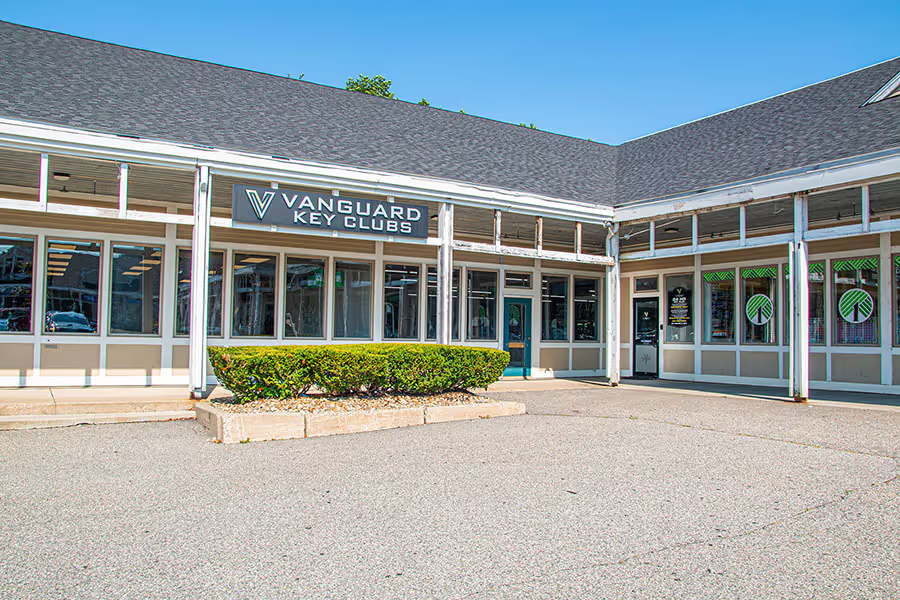
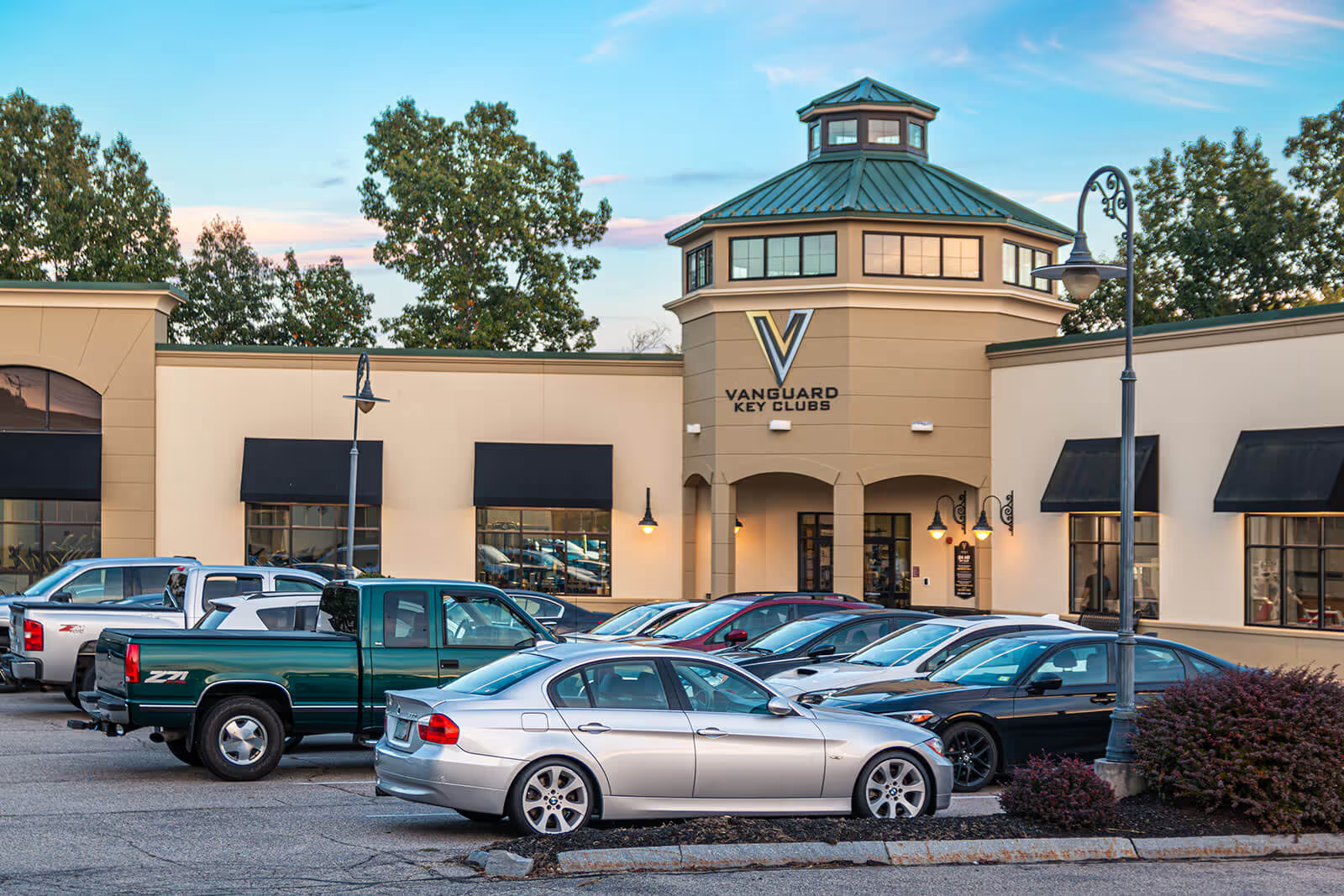
The unmanned, 24/7 franchise model changes that math. Vanguard Key Clubs operates with no on-site staff and no payroll. Members access the gym around the clock using key-based entry. Cloud-based systems handle day to day operations remotely. This structure enables a true semi-absentee ownership model, where you manage the business without being tied to a front desk or a shift schedule.
For investors who want to own multiple locations or maintain another career alongside their gym business, the no-payroll model is a foundational differentiator.
Which Model Is More Profitable and Worth It?
There is no universal answer to which model is "more profitable." It depends on execution, location, and how you define profitability (cash flow vs. equity vs. lifestyle).
What's clear is that demand for fitness facilities is strong. According to the Health & Fitness Association, US fitness facility membership reached a record 77 million gym members in 2024. The same organization's 2025 fitness benchmarking report found that median fitness facility revenue growth was 9.9% in 2024, with net membership growth of 5.5% and a member retention rate of 66.4%.
Franchises trade a share of revenue (ongoing royalty payments) for lower risk and faster ramp-up. You get a proven business model, brand recognition, and support. Independents keep all profit but carry all risk and must build recognition from zero.
The semi-absentee, no-payroll model adds another variable. When you remove staffing costs and daily supervision requirements, the operating margin and owner time commitment look different than a traditional staffed gym. That's why comparing "gym franchise profitability" requires understanding the specific model, not just the category.
For more on the financial side, read our breakdown of gym franchise profitability.
How to Choose the Right Model for You
Start with what you actually want from ownership. Each path has its own pros and cons.
If you want a job, not a business, corporate employment may fit. You earn a salary, follow company direction, and have no ownership stake or equity upside.
If you want full control and can build systems yourself, an independent gym gives maximum freedom. You keep all the profit, but you also carry all the risk and do all the work.
If you want a proven system with support, a franchise makes sense. You benefit from an established brand, documented processes, and franchisor resources. According to the International Franchise Association's IFA 2026 franchise outlook, the US franchise sector is projected to reach 845,000 total units in 2026, and personal services (the category that includes health and fitness) will grow at a rate of 1.8%.
If you want a franchise that doesn't require daily on-site management, look for a semi-absentee model. The 24/7 unmanned structure removes staffing from your operating equation, making multi-location growth more realistic and lifestyle flexibility more achievable.
For a step-by-step walkthrough of the process, check out our guide on how to open a gym franchise.
Frequently Asked Questions
What is the difference between a gym chain and a gym franchise?
A gym chain is any fitness brand with multiple locations. A gym franchise is an independently owned location that operates under that brand through a licensing agreement.
Is Planet Fitness a franchise or corporate owned?
Planet Fitness is both. The chain includes franchise-owned locations operated by independent investors and corporate-owned locations operated directly by the parent company.
What does "corporate gym" mean?
A corporate gym is a location owned and operated by the parent company itself, not by an independent franchisee. You can work at a corporate gym, but you cannot buy or own it.
Is a gym franchise more profitable than an independent gym?
It depends on execution, location, and operating model. Franchises trade ongoing royalties for lower risk and faster ramp-up; independents keep all profit but build everything from scratch with no support.
How much does it cost to open a gym franchise?
Costs vary by brand. As one example, Vanguard Key Clubs' 2025 FDD discloses a $40,000 franchise fee and a total estimated initial investment of $207,350 to $527,700 for a single unit. The franchisee pays an initial franchise fee plus ongoing fees disclosed in the FDD.
Find the Gym Ownership Model That Fits Your Goals
"Chain" describes size. "Franchise" and "corporate" describe ownership. The model that fits you depends on whether you want a job, a hands-on business, or a system-backed investment you can manage remotely.
If you're looking for a franchise structure designed around low overhead, no payroll, and semi-absentee flexibility, Vanguard Key Clubs offers a 24/7 unmanned model built by gym owners who understand the operational realities. The franchise fee, investment range, and ongoing contributions are all disclosed in the FDD, so you can evaluate the opportunity with real numbers.
Ready to see if it fits? Explore our 24/7 gym franchise opportunity and take the next step.