Gym franchises can be profitable, but the margin between a strong return and a disappointing one often comes down to the operating model you choose. Payroll, location, and how the business runs day to day all shape what you actually keep.
This guide breaks down average profit margins, the costs involved, what drives profitability, and how different franchise models compare so you can evaluate the opportunity with clarity.
Are Gym Franchises Profitable?
Gym franchises can be profitable, though the answer depends on the operating model, location, and how the business runs day to day. Most franchise owners take 12 to 24 months to break even, and profit margins across the fitness industry typically fall between 15% and 30%.
So what does "profitable" actually mean?
It means the revenue left over after you subtract all operating costs, royalty payments, marketing contributions, and any debt service. That leftover amount is what you keep.
The wide margin range exists because gym franchises operate under very different business models. A high-volume gym with a large staff has a different cost structure than an unmanned 24/7 club with no payroll. The model you choose shapes your margin potential from day one.
Average Profit Margins for a Gym Franchise
Profit margin is the percentage of revenue you retain after covering all expenses. If your gym brings in $300,000 annually and you keep $60,000, your margin is 20%.
Margins vary based on the type of gym you operate. Traditional staffed gyms carry higher overhead, which compresses margins. Boutique studios depend heavily on class utilization. Unmanned gyms, by contrast, eliminate labor costs almost entirely, which tends to produce stronger margins.
The model you select determines your baseline. From there, execution matters.
How Much a Gym Franchise Owner Makes
Gross revenue and owner take-home pay are two different numbers. Your gym might generate $400,000 in annual revenue, but after rent, equipment leases, royalties, marketing fees, and operating expenses, your personal income could be a fraction of that total.
Owner earnings also depend on involvement. A hands-on owner-operator who manages the club daily has a different financial picture than a semi-absentee owner who manages remotely and pays for systems that run the business. Multi-unit owners often see higher total compensation because fixed costs spread across locations.
Mature clubs with established membership bases tend to yield higher owner income than newly opened locations still ramping up. The first year or two is typically about building membership, not maximizing take-home pay.
Main Revenue Streams of a Gym Franchise
Profitable gyms rely on more than membership dues alone. The concept of "dual revenue streams" refers to combining recurring membership income with ancillary services that increase revenue per member.
Membership Dues
Membership dues are the recurring monthly or annual fees members pay for access. This forms the primary, predictable revenue source for any gym franchise. Membership dues create the baseline cash flow that covers fixed costs.
Ancillary Services and Add-Ons
Ancillary services include premium membership tiers, locker rentals, tanning beds, hydromassage, and multi-location access upgrades. Each add-on increases revenue without requiring additional square footage or major capital investment.
Retail and Vending
Supplements, beverages, branded apparel, and automated vending contribute margin without requiring staff interaction. Unmanned gyms often rely more heavily on vending because there is no front desk to process retail transactions.
Personal Training and Programming
One-on-one training, small group sessions, and specialty programming can generate high-margin revenue. Some franchise models include personal training; others, such as unmanned gyms, may not. Removing personal training reduces complexity but also removes that income stream.
Cost to Open a Gym Franchise
Understanding total investment is necessary before evaluating profitability. The upfront costs fall into a few main categories. Review the Franchise Disclosure Document (FDD) to better understand the costs before you invest. Commonly disclosed items you’ll find include:
Initial Franchise Fee
The initial franchise fee is the one-time payment to the franchisor that grants brand rights, training, and launch support. Fees vary by brand, typically ranging from $20,000 to $50,000 or more.
Buildout and Equipment
Buildout and equipment is usually the largest portion of the investment. This category includes leasehold improvements, flooring, HVAC, and fitness equipment procurement. Site selection and club design support from the franchisor can reduce surprises here. Total buildout costs can range from under $200,000 to over $500,000 depending on location size and condition.
Royalties and Marketing Fund Contributions
Royalty fees and marketing fund contributions are ongoing fees paid as a percentage of gross revenue. Royalties support operational systems and brand development. Marketing funds support national and local advertising. Together, royalties and marketing contributions typically range from 7% to 10% of gross revenue.
Factors That Affect Gym Franchise Profitability
Profitability is not guaranteed. It depends on variables you can control and some you cannot.
Labor and Staffing Costs
Labor is often the largest ongoing expense for traditional gyms. This category includes wages, benefits, payroll taxes, training, and turnover-related hiring costs. Unmanned models eliminate labor expense almost entirely, which is why unmanned gyms tend to produce higher margins.
Location and Market Density
Population within the trade area, local competition, visibility from main roads, parking availability, and ease of access all affect membership growth. Franchisor site selection support can help mitigate risk, but location remains a major variable.
Member Retention and Churn
"Churn" is the rate at which members cancel. Acquiring new members is more expensive than retaining existing ones, so high churn compresses margins. Gyms that deliver consistent value and convenience tend to retain members longer.
Operating Model and Hours
A 24/7 access model increases member convenience without requiring around-the-clock staffing if the gym is unmanned. Operating hours directly impact both revenue potential and labor costs. The more hours you can offer without adding payroll, the better your margin profile.

How Long It Takes to Reach ROI on a Gym Franchise
ROI, or return on investment, is the point where cumulative profits equal your initial investment. The timeline varies by location, membership ramp-up speed, and operating efficiency.
Lower-overhead models with faster member acquisition tend to reach ROI sooner. A gym that opens with 300 presold memberships and no payroll will hit breakeven faster than a staffed club that opens with 100 members and a full schedule of employees.
You might be thinking: how do I speed this up? The answer is usually a combination of strong presales, disciplined cost control, and a model that minimizes fixed expenses from the start.
Most Profitable Gym Franchises to Own
Profitability varies by brand, model, and execution. Here are several well-known options and what influences margin potential for each.
Anytime Fitness
Anytime Fitness has a large global footprint with 24/7 access. Clubs are staffed during business hours. The brand is known for broad recognition and reciprocal member access across locations.
Snap Fitness
Snap Fitness uses a compact club format with 24/7 access. The smaller footprint can reduce buildout costs compared to traditional gyms.
Workout Anytime
Workout Anytime offers 24/7 access with a focus on affordability and value-oriented membership pricing. The franchise network is growing in the U.S.
Planet Fitness
Planet Fitness operates a high-volume, low-price model with large facilities. The brand relies on scale and high membership counts to drive profitability. Thin margins require strong execution. Planet Fitness locations require constant staffing, contributing to the overall cost of business.
Vanguard Key Clubs
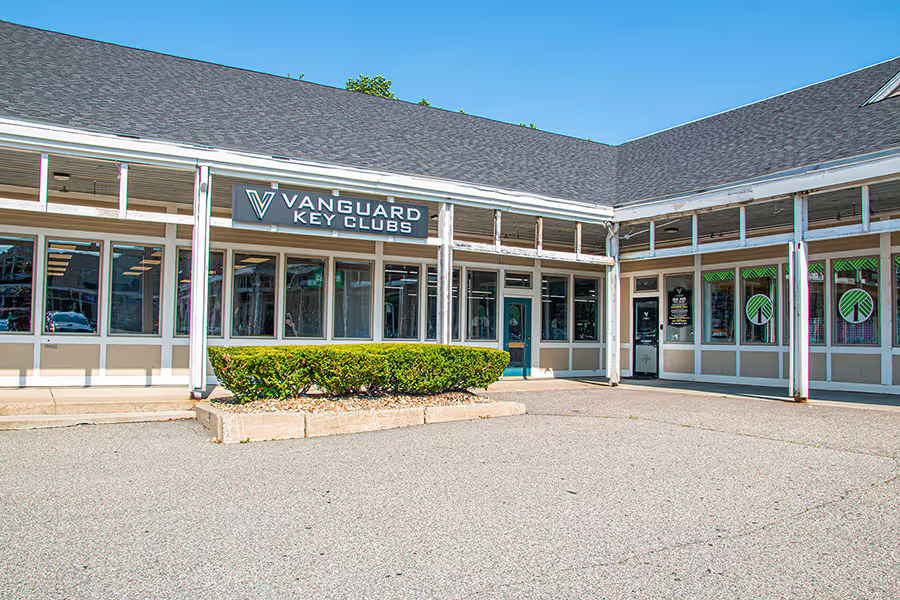
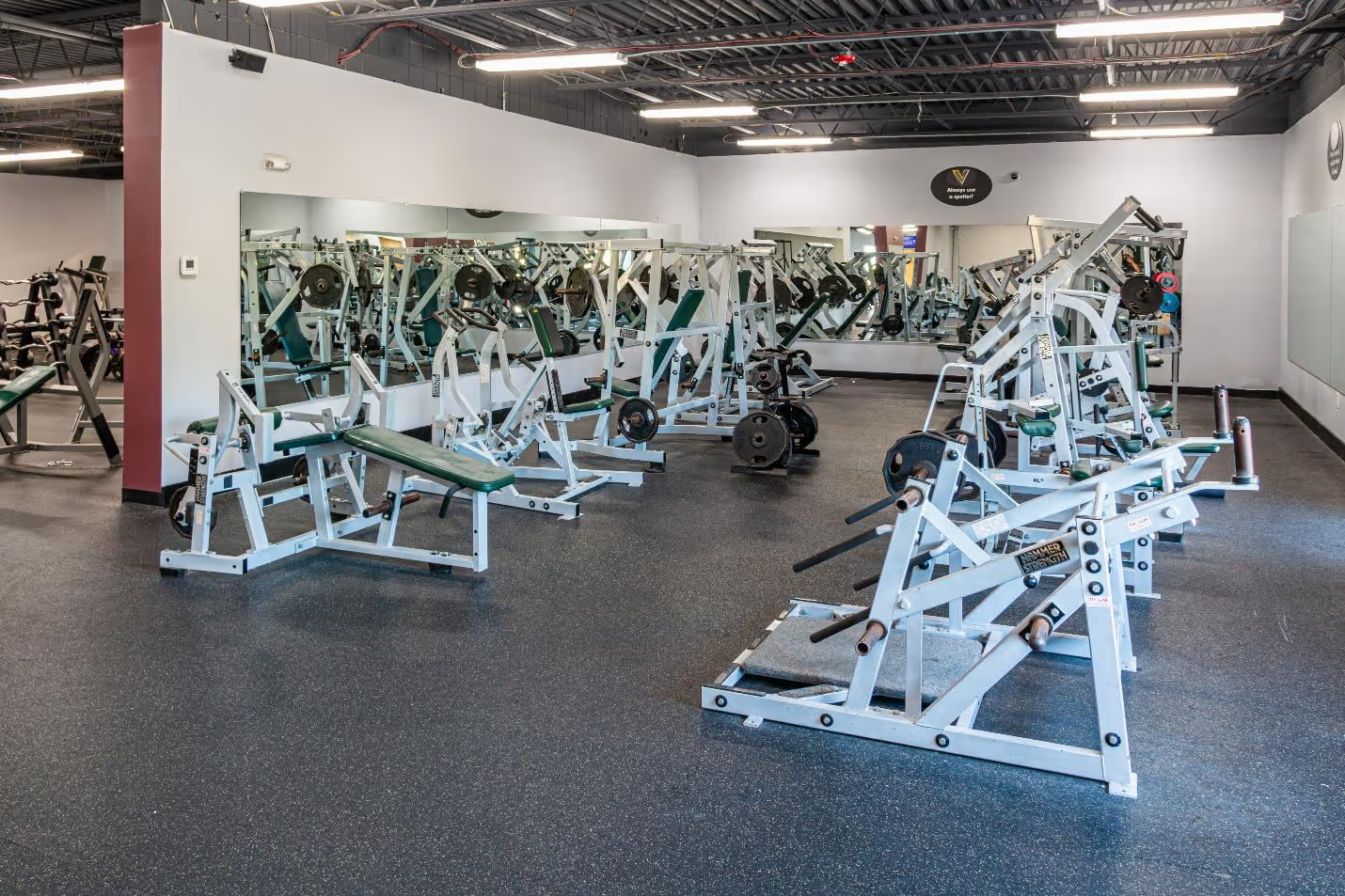
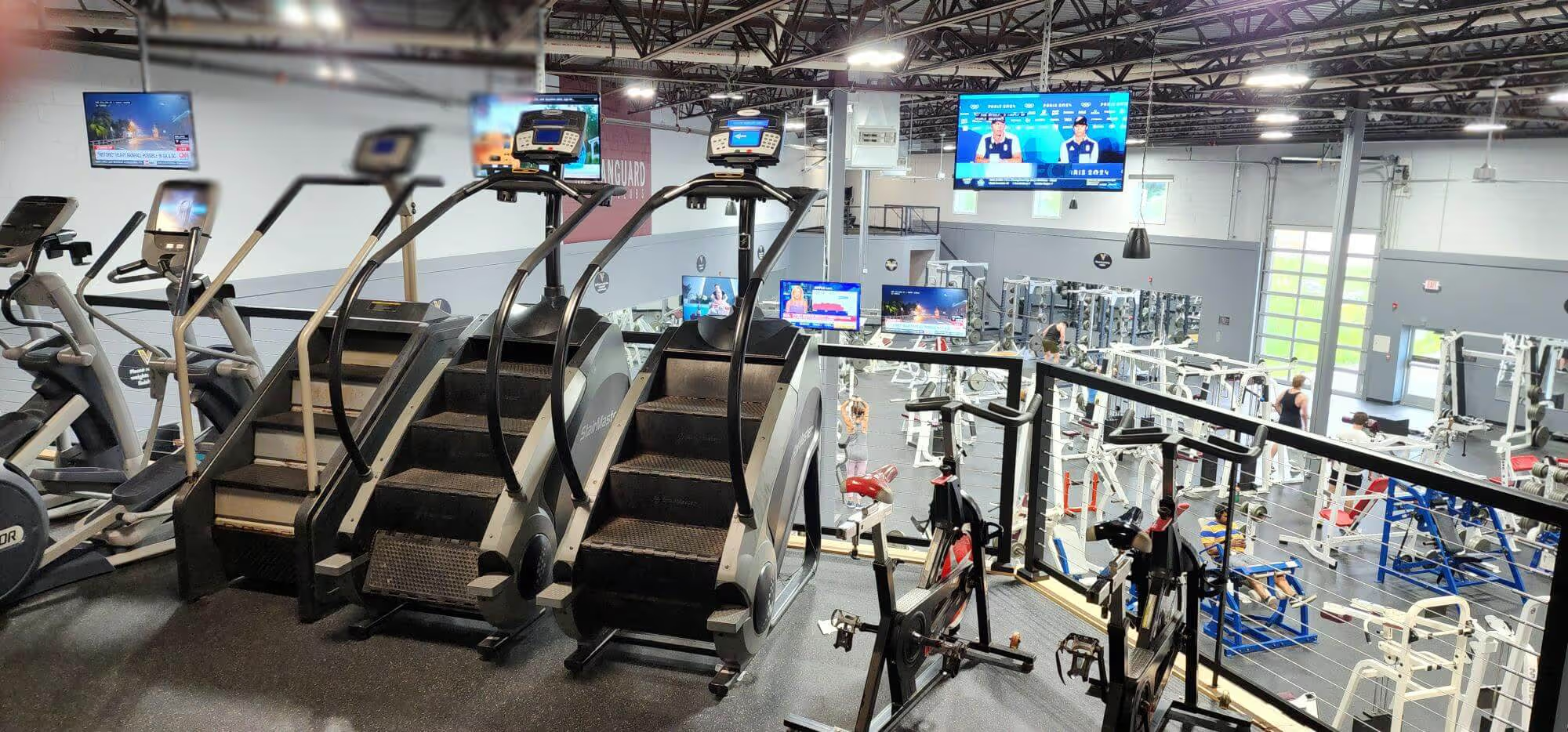
Vanguard Key Clubs is an unmanned 24/7 model with no payroll, dual revenue streams, and cloud-based remote management. The franchise is designed for semi-absentee ownership and multi-location scalability. Vanguard Key Clubs was founded by operators with over 30 years of fitness industry experience and provides a proven business model for entrepreneurs who want to own a fitness business that doesn’t require significant payroll costs.
Why Unmanned 24/7 Gym Franchises Have Higher Profit Margins
"Unmanned" means no on-site staff. Members access the gym via key fob or app, and owners monitor operations remotely.
This model connects lower overhead directly to improved margins:
- No payroll expense: Eliminates wages, benefits, scheduling, and turnover costs
- Reduced management burden: Owners do not supervise daily front-desk operations
- Tech-enabled access: Members enter via key fob or app, allowing true 24/7 operation without staffing shifts
- Scalability: Easier to manage multiple locations remotely when there is no staff to coordinate
Vanguard Key Clubs is an example of an unmanned model built specifically for semi-absentee, remote ownership.
How to Increase Profit as a Gym Franchise Owner
If you are evaluating franchises or already operating one, a few approaches can improve your margin.
1. Eliminate Payroll With an Unmanned Model
If you are still evaluating franchises, prioritize models that do not require staffing. If you already operate a staffed gym, consider whether the model allows transition to reduced or eliminated staff.
2. Add Ancillary Revenue Streams
Layer in vending, premium upgrades, and add-on services to increase revenue per member without increasing fixed costs.
3. Scale to Multiple Locations
Profitability per location often improves with scale due to shared marketing, centralized systems, and operational efficiencies.
4. Use Cloud Systems for Remote Management
Cloud-based tools allow owners to monitor access, track revenue, and manage operations from anywhere. Cloud systems support true semi-absentee ownership and make multi-unit expansion practical.
Building a Profitable Gym Franchise With Vanguard Key Clubs
The factors discussed throughout this article (unmanned operations, dual revenue streams, low overhead, cloud-based management, and experienced franchisor support) are the foundation of the Vanguard Key Clubs model.
If you are looking for a gym franchise designed for profitability and lifestyle flexibility, Vanguard Key Clubs offers a system built by gym owners who understand the operational realities of running clubs.
Request more information about the franchise opportunity today.
Frequently Asked Questions About Gym Franchise Profitability
Which gym franchise is most profitable?
Profitability depends on the operating model, location, and owner involvement. Unmanned 24/7 franchises with low overhead and recurring membership revenue tend to produce stronger margins than staffed or boutique models.
Can you own a gym franchise as a semi-absentee investor?
Yes. Some franchise models are designed for semi-absentee ownership. Unmanned gyms with cloud-based management systems allow owners to operate remotely without daily on-site involvement.
Should I open an independent gym or buy a franchise?
Franchises provide proven systems, brand recognition, and operational support, which reduce risk compared to starting from scratch. Independent gyms offer more flexibility but require building every system yourself.
Are unmanned gym franchises more profitable than staffed gyms?
Unmanned gyms eliminate payroll, which is often the largest ongoing expense for staffed gyms. This overhead reduction typically results in higher profit margins for unmanned models.