
Boutique studios. Big box gyms. 24/7 access gyms. From the parking lot, they may like the same business wearing different paint. Walk behind the front desk, though, and they are not the same at all. The equipment, the class schedule, and the workout format may differ, but that’s not what’s important.
What actually separates one gym franchise from another is who has to show up every single day for the doors to open, and that detail changes everything for the person signing the franchise agreement.
When researching a fitness franchise for the first time, it often helps to sort the options by operating model versus workout trend. Below, we’ll break down the main categories of gym franchises, what each one asks of an owner day to day, and where a 24/7 unstaffed model like Vanguard Key Clubs changes the equation.
Key Takeaways
- Gym franchises fall into a few distinct operating models, and the model matters more to an owner's daily life than the workout format does.
- Instructor-led and specialty class concepts, including personal training, boxing, martial arts, dance fitness, pilates, yoga, CrossFit, indoor cycling, rock climbing, bungee fitness, and kids gym franchises, generally require an owner to staff, schedule, and manage people every day the doors are open.
- Full-service, big-box gyms carry the highest overhead and staffing counts of any category.
- A 24/7, unstaffed model removes the daily staffing burden entirely, changing what ownership actually looks like.
- Investment ranges, staffing needs, and time commitment vary widely by category, so matching the model to your own goals matters more than picking a trendy workout format.
Not All Gym Franchises Are Built the Same
Many people compare gym franchises the way they compare restaurants: by “cuisine.” Think boxing versus pilates or yoga versus CrossFit. Rock climbing franchise over traditional strength training models. Customers might examine a location based on fitness levels it caters to or training programs available, but that’s not the whole story. The comparison tells you about the member experience, but it tells you almost nothing about what the owner sees or does.
A more useful way to sort gym franchises is by how much the business depends on people being physically present and actively working. Some concepts can’t function without an instructor on the floor for every scheduled hour. Others are built specifically to run without one. Understanding where a category falls on that spectrum is the real starting point for evaluating any gym franchise opportunity, well before you get to brand names or class formats.
The Instructor-Led Studio Model
A large share of the fitness franchise market focuses on one core requirement: a certified instructor has to be present for the service to exist at all. Consider:
- Boxing gym franchises
- martial arts franchises
- Dance fitness franchises
- Personal training franchises
- Kids gym franchises
There is no version of a boxing class, a martial arts belt curriculum, or a personal training session that happens without a trained person running it in real time.
Boxing, Martial Arts, and Dance Fitness Franchises
Boxing gym franchises and martial arts franchises sell curriculum and coaching as much as they sell a workout. Belt progressions, technique corrections, and sparring supervision all require a qualified instructor on-site. The owner's most important daily job becomes recruiting, training, and retaining coaching talent. Dance fitness franchises face a similar dependency: the format only works if an instructor can lead choreography live, session after session. This puts instructor turnover directly on the list of business risks rather than a background HR concern.
Personal Training and Kids Gym Franchises
Personal training franchises are staffing-dependent by design. Revenue ties directly to trainer hours sold. Growth requires hiring, certifying, and scheduling more people rather than simply adding equipment. Kids gym franchises add another layer on top of that staffing requirement. Background checks, supervision ratios, and child safety protocols raise both the operating cost and the liability profile of the business, on top of the instructor dependency every class-based concept shares.

The Specialty Class Model
Pilates franchises, yoga studio franchises, CrossFit franchises, indoor cycling franchises, rock climbing gym franchises, and bungee fitness franchises make up a second group. These concepts center around a fixed class schedule and require a specific equipment investment. This often includes:
- Reformer machines for pilates
- Climbing wall build-outs for rock climbing
- Harness systems for bungee fitness
- Olympic lifting equipment for CrossFit
Each of these fitness business categories can build a loyal, high-retention member base, but each one also requires an instructor for every scheduled class. In several cases, they also demand extensive startup costs through a specialized (and expensive) facility buildout beyond a standard fitness floor. Franchise owners considering any of these categories should expect to actively manage a class calendar and an instructor roster as a core, ongoing part of the job, not a startup task that goes away after year one.
The Full-Service, Big-Box Gym Model
Traditional full-service gyms sit at the far end of the staffing spectrum. A big-box gym franchise typically runs a front desk, a group fitness studio, a personal training department, and a maintenance function simultaneously. Payroll touches nearly every part of the operation. According to research from IHRSA, the trade association for the health club industry, payroll has historically represented well over 40 percent of total revenue at a typical health club. That figure is a useful benchmark for anyone evaluating a staffed gym concept: a meaningful share of every membership dollar is committed to people before it ever reaches the bottom line. More importantly, that share doesn’t shrink as the business grows. It scales with it.
The 24/7 Unstaffed, Semi-Absentee Model
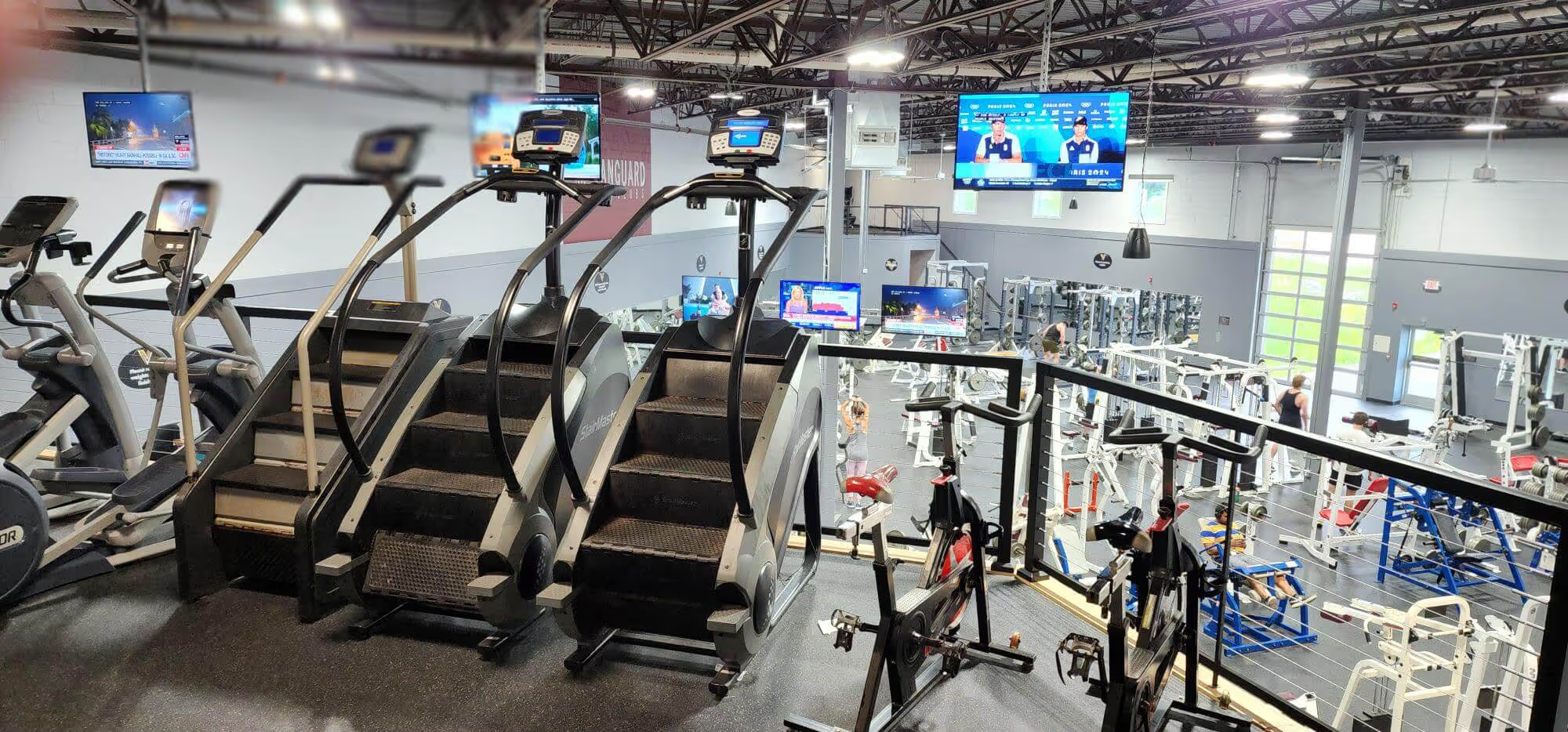
There is, however, an alternative that offers a proven business model. A 24/7 gym franchise built around key-card access removes the dependency that defines every category above. There is no class schedule to staff or instructor roster to manage. There are no front desk shifts to cover. Members access the club with a key card whenever they want, day or night, and the club runs on cloud-based management software rather than a payroll schedule. That structural difference allows this model to run as a semi-absentee business: it doesn’t require an owner or staff member on-site to open, close, teach, or supervise. That’s a meaningfully different daily commitment than what a boxing, personal training, or big-box gym franchise asks of its owner.
But this doesn’t mean the business runs itself. Site selection, equipment procurement, member growth, and vendor relationships still require active ownership attention. It removes one variable that drives cost and complexity in every other category, continuous staffing, from the model from the start.
Comparing the Real Cost and Time Commitment Across Gym Franchise Types
Most people look at the initial investment or startup costs first, but that’s only part of the real cost comparison across gym franchise types. A boxing, martial arts, or personal training franchise with a lower up-front investment can still carry a higher ongoing cost once instructor payroll, scheduling software, and turnover-driven hiring factor in. A full-service gym franchise multiplies that same staffing cost across several departments at once.
Vanguard Key Clubs' investment range, as disclosed in Item 7 of its Franchise Disclosure Document (FDD), runs from $207,800 to $527,700, which includes the $40,000 initial franchise fee, leasehold improvements, equipment, and initial working capital. Ongoing fees include 5 percent of gross sales in royalties, a 2 percent brand development fee, and a 2 percent marketing fee, all disclosed in Item 6 of the FDD.
What’s missing? A payroll line for instructors, trainers, or front desk staff. The model is built to run without them. Prospective owners comparing categories should ask about staffing costs and time commitment with the same seriousness they apply to the initial investment figure, since that number tells only part of the story.
Which Type of Gym Franchise Fits Your Goals as an Owner
The right category depends less on which workout is trending and more on three honest questions. How much of your own time do you want to spend on-site each week? Do you want to manage a team of instructors, or would you rather not manage staff at all? And are you looking for a business you can run locally and hands-on, or one that could eventually run across multiple markets without requiring you in the building? Instructor-led and specialty class concepts reward owners who want to be closely involved in coaching and community-building. A 24/7, unstaffed model rewards owners who want the fitness industry's growth without taking on a staffing-heavy operation to get it.
Explore the Benefits of Becoming a Semi-Absentee Business Owner
There are plenty of benefits to entering your local market with a franchise model. In addition to marketing support and established systems that make running a semi-absentee business possible, Vanguard Key Clubs provides the flexibility to start your first fitness-focused business without worrying about staffing.
Learn more about this exciting franchise opportunity. Contact our team today to explore a fitness business with brand recognition and systems built to help you succeed.
Frequently Asked Questions
Do all gym franchises require fitness industry experience?
No. Most gym franchise systems, including staffed and unstaffed models, are built for business-minded owners rather than certified trainers or instructors. Franchisors typically provide initial training covering operations, marketing, and (where applicable) staffing, so prior gym experience is helpful but rarely required to qualify as a franchisee.
What is the difference between a boutique fitness franchise and a big box gym franchise?
Boutique fitness franchises, such as pilates, yoga, boxing, or kids-centered gyms often operate in a smaller footprint that focuses on specific classes or instructors. A big box gym franchise operates a bigger facility and often includes multiple options, including group fitness, personal training, and a staffed front desk. That means more space and amenities, but higher costs thanks to increased payroll.
How much does it cost to open a gym franchise?
Cost varies significantly by category and brand. Instructor-led and boutique concepts can have lower initial investments but carry ongoing instructor payroll costs. Full-service gyms tend to require larger investments tied to facility size and staffing. Every franchisor is required to disclose a specific estimated initial investment range in Item 7 of its Franchise Disclosure Document, which is the most reliable source for actual cost figures for any specific brand.
Is an unstaffed, semi-absentee gym franchise actually profitable?
Profitability depends on the individual franchisee, the market, and how the business is operated, and no franchisor can guarantee a specific financial outcome. What an unstaffed model changes is the cost structure behind that outcome: by removing continuous instructor and front-desk payroll, an unstaffed gym franchise can operate with meaningfully lower fixed labor costs than a staffed concept of a similar size, which is a structural advantage even though it is not a guarantee of profit.