Absentee owner franchises attract investors who want business ownership without daily on-site management. But most "passive income" businesses still require oversight, decisions, and accountability. The best absentee owner franchises in 2026 use proven systems, recurring demand, technology, and delegated labor to reduce owner involvement without pretending ownership is effortless.
Key Takeaways
- The best absentee owner franchises are semi-absentee businesses, not truly passive investments.
- Strong absentee franchise opportunities use systems, automation, and clear staffing models to reduce daily owner involvement.
- Fitness, vending, laundromats, property services, storage, and B2B services are the most common hands-off franchise categories.
- Vanguard Key Clubs fits absentee-minded investors because its 24/7 unstaffed gym model eliminates front-desk staffing and supports remote oversight.
- Before choosing a model, compare owner involvement, staffing needs, startup costs, recurring revenue, and local market demand.
What Are Absentee Owner Franchises?
Absentee owner franchises are designed so the owner doesn't need to work inside the location every day. Most still require leadership, financial review, hiring decisions, vendor management, and marketing oversight. “Absentee" usually means semi-absentee in practice.
A truly hands-off franchise is rare. Every business needs someone accountable for standards, performance, and customer experience. The better question isn't whether a franchise is passive. It's how much time, staff, and operational complexity the owner must manage.
What Makes A Franchise Good For Absentee Ownership?
The best absentee owner franchises combine predictable demand, documented systems, manageable staffing, and clear owner dashboards. Strong opportunities typically share these traits:
- Recurring revenue from memberships, subscriptions, contracts, or repeat services
- Low staffing complexity compared to food service or high-touch retail
- Technology that tracks sales, access, scheduling, billing, or customer activity
- Vendor or contractor support for cleaning, repairs, fulfillment, or maintenance
- Brand training that helps non-industry owners follow an established model
Weak absentee franchises depend on constant customer service, high employee turnover, or owner-driven sales. Those models may still work, but they rarely feel hands-off.
Best Absentee Owner Franchise Categories In 2026
The best hands off franchises in 2026 tend to come from industries where customers need repeat access, routine service, or simple transactions. Investors should compare categories by labor requirements, startup costs, location sensitivity, and the amount of daily decision-making required after opening.
1. 24/7 Fitness Franchises
A 24/7 gym franchise fits absentee ownership when the model uses member access technology, automated billing, remote management software, and minimal on-site staffing. Recurring membership revenue adds predictability.
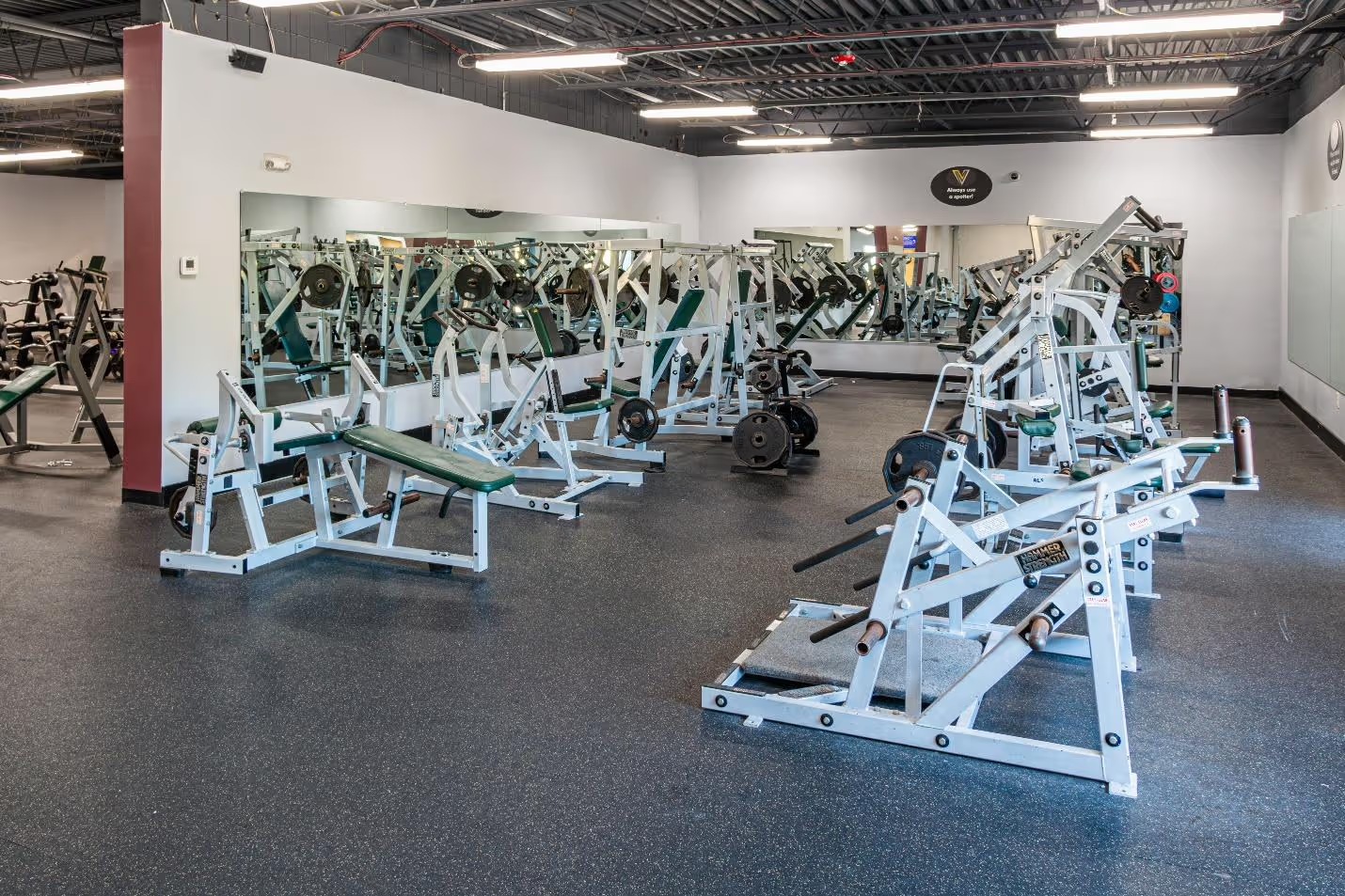
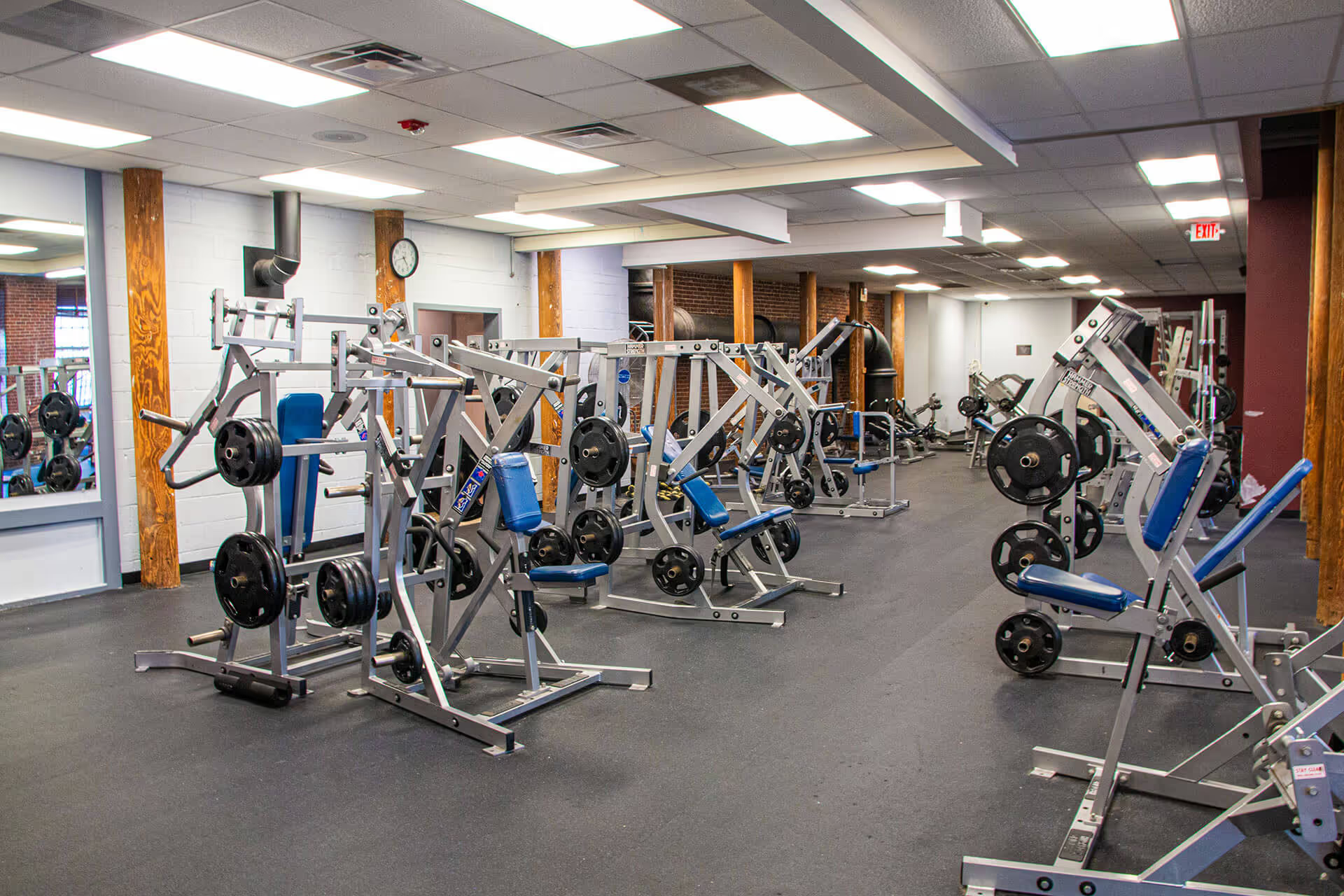
Vanguard Key Clubs is a strong example. Its 24/7 unstaffed fitness format eliminates front-desk payroll and lets owners manage the business remotely.
2. Vending Franchises
Vending machines sell products without an employee at the point of sale. But owners still handle route planning, restocking, machine repairs, product selection, and location acquisition. Vending works best for owners who can manage logistics and less for those who underestimate the effort required to secure profitable locations.
3. Laundromat Franchises
Laundromats support absentee ownership when they use self-service machines, card-based payments, remote cameras, and outside contractors for cleaning and repairs. They benefit from steady local demand. But they become demanding when machines break often, leases run high, or maintenance is unreliable.
4. Self-Storage Franchises
Self-storage works for absentee owners because customers manage payments digitally and access units with minimal staff interaction. Ownership centers on occupancy, pricing, security, and local visibility. The model can require significant real estate capital, so investors should review land costs, competition, and financing before treating storage as a simple passive play.
5. Property Service Franchises
Property service franchises can support semi-absentee ownership when crews do the fieldwork and the owner manages sales, scheduling, quality control, and finances. Common categories include cleaning, lawn care, painting, pest control, and restoration. These franchises are rarely fully hands-off. Labor management matters too much.
6. B2B Service Franchises
B2B service franchises fit absentee-minded owners because business customers often buy recurring services on contracts. Examples include commercial cleaning, signage, staffing, and facilities support. The owner still needs to monitor client retention, service delivery, and account growth, but hours tend to be more flexible.
Why Vanguard Key Clubs Fits Absentee-Minded Investors
Vanguard Key Clubs removes many daily staffing issues that make traditional gym ownership difficult. The 24/7 unstaffed model uses automated access, remote management systems, and streamlined operations. Owners oversee the business without working the front desk.
Franchisees also receive structured support: site selection, club design, equipment procurement, software setup, onboarding, pre-launch marketing, and ongoing operations guidance through the brand's gym franchise training and support program.
For investors comparing a semi-absentee gym franchise model, the key distinction is honesty. Vanguard Key Clubs isn't positioned as "do nothing" ownership — it's a streamlined fitness business built for remote oversight and a more flexible lifestyle.
How Much Do Absentee Owner Franchises Cost?
Costs vary widely by industry. A vending franchise typically requires less upfront capital than a fitness club or storage facility.
Vanguard Key Clubs requires a $40,000 franchise fee, an estimated initial investment of $207,800–$527,500, and $100,000 in minimum liquid capital. Ongoing fees include a 5% royalty, 2% marketing fund, and 2% brand development fund.
Beyond the initial investment, buyers should factor in payroll exposure, lease requirements, equipment replacement, local marketing, software fees, and expected weekly hours.
How To Choose The Best Hands Off Franchise Opportunity
The right franchise should match your capital, risk tolerance, schedule, management style, and local market. Before deciding, ask:
- How many hours does the average owner work after opening?
- What can the owner do remotely?
- What requires a manager, employee, or contractor on-site?
- What recurring revenue streams support predictable cash flow?
- What causes owners to become more involved than expected?
Speaking with current franchisees during due diligence is essential. They'll tell you what daily oversight actually looks like after launch.
Are Absentee Franchises Truly Passive Income?
Absentee franchises are usually not passive income because the owner still owns the results. A semi-absentee franchise can reduce daily workload, but the owner still needs to review performance, manage vendors or managers, monitor finances, and make decisions when the business needs attention.
That honest distinction matters. Passive income is misunderstood because most “passive” businesses still need people, time, and attention. Investors who understand semi-absentee ownership can choose a model with fewer surprises.
Vanguard Key Clubs fits that practical mindset. The model does not ask owners to live inside the gym. The model gives owners a 24/7 unstaffed fitness system built to reduce staffing complexity, support remote oversight, and help owners build a business around their life instead of giving their life to the business.
Frequently Asked Questions: Best Absentee Owner Franchises
What is the difference between absentee and semi-absentee franchises?
Absentee suggests the owner doesn't work in the business daily. Semi-absentee more accurately describes managing performance without being on-site full-time. Most absentee franchises are really semi-absentee.
Are hands off franchises really hands off?
Rarely. Every franchise needs financial oversight, customer standards, and problem-solving. The best hands-off franchises reduce owner involvement through systems, technology, staff, and recurring revenue.
Is Vanguard Key Clubs an absentee owner franchise?
Vanguard Key Clubs is a semi-absentee fitness franchise built for remote ownership. Its 24/7 member access, automated management systems, and unstaffed operating model minimize daily on-site involvement.