Franchise financing is the gap between researching an opportunity and signing a franchise agreement. Before you commit, you need to know how you will fund the franchise fee, buildout, equipment, and first few months of operations. Understanding your franchise funding source upfront prevents surprises when you are ready to move.
This guide covers SBA loans, retirement rollovers, and other financing paths. The goal is to help you match your capital structure to your ownership goals.
Key Takeaways
- Most franchise buyers combine sources: personal cash for the down payment plus an SBA or bank loan for the rest.
- SBA 7(a) loans are the most common route, backing up to $5 million with 10 to 25 year terms.
- "No money down" is mostly a myth; every legitimate path still requires your own capital, usually at least 10% of the total.
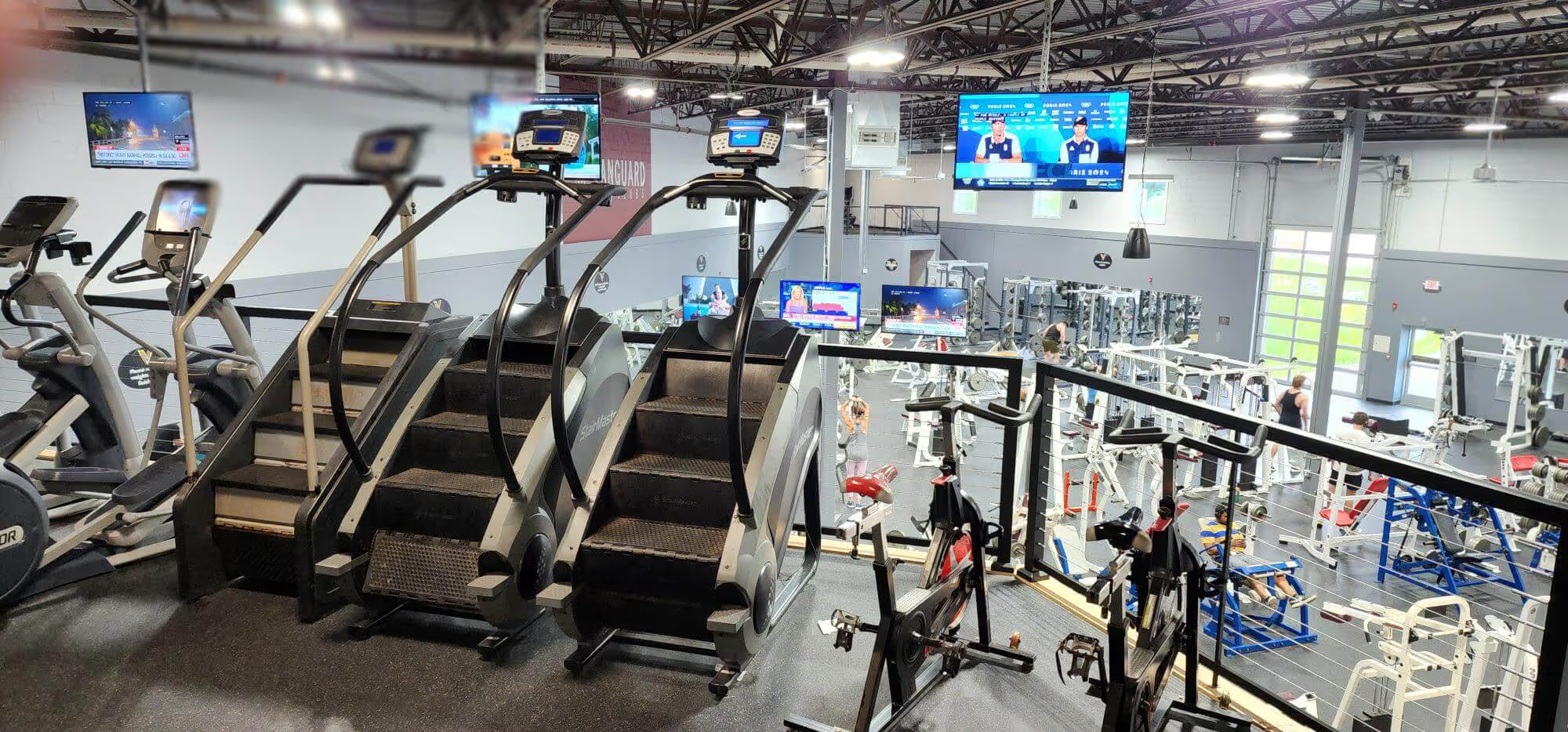
- Match the financing to the model. A low-overhead, semi-absentee gym like Vanguard Key Clubs requires $100,000 liquid capital and $207,800 to $527,500 total.
- Read the Franchise Disclosure Document (Item 7 shows total investment) before you borrow. Franchisors must provide it at least 14 days before you commit money.
What Franchise Financing Covers
Franchise financing refers to the capital you borrow or assemble to cover the costs of opening a location. Those costs typically fall into four categories:
- Franchise fee: the upfront payment for the right to use the brand
- Buildout and leasehold improvements: construction, signage, and site preparation
- Equipment and fixtures: gym machines, POS systems, and furnishings
- Working capital: cash reserves for operations before the business is self-sustaining
These are distinct from ongoing fees like royalties and marketing contributions, which come out of revenue once you are operating.
Lenders view franchises favorably because the business model is already proven. You are buying into a system with defined unit economics, operational support, and brand recognition. That track record makes franchise lending less risky than funding a startup from scratch.
According to the International Franchise Association's economic outlook, total franchise output is projected to exceed $936.4 billion in 2025, increasing by 4.4%, from $896.9 billion in 2024. That growth is one reason franchise-focused lenders remain active.
How Much Money Do You Really Need?
Gym franchise costs can vary based on several factors, but it’s important that your financing covers the full initial investment, not just the franchise fee. Those two numbers are often confused, and the difference matters.
Take a concrete example. At Vanguard Key Clubs, the initial franchise fee is $40,000. The total investment, including buildout, equipment, and working capital, ranges from $207,800 to $527,500. The minimum liquid capital requirement is $100,000.
That liquid capital figure is what lenders focus on because it represents accessible cash. Home equity and retirement accounts do not count toward this threshold.
Lenders typically expect you to contribute at least 10% of the total investment as a down payment, and often more. The rest can come from a Small Business Administration (SBA) loan, bank financing, or other sources. If you do not meet the liquid capital threshold, most lenders will not approve the loan.
Before you apply, review the franchisor's FDD. Item 7 lists every line item in the estimated initial investment. That document gives you the real numbers to build your financing plan around.
Franchise Financing Options and How They Work
Most franchise owners do not fund their entire investment from a single source. They combine personal savings for the down payment with one or more external financing methods. We’ve listed some of the most popular financing options below:
SBA Loans (7(a) and 504)
SBA loans are government-guaranteed loans issued through banks and credit unions. Because the Small Business Administration backs a portion of the loan, lenders can offer more favorable terms than conventional loans.
The SBA 7(a) loan program is the most common for franchise purchases. These loans can fund franchise fees, buildout, equipment, and working capital. The maximum loan amount is $5 million.
Per the SBA repayment terms, loans extend up to 10 years for equipment and working capital. Loans that include real estate can extend to 25 years.
The SBA 504 loan is structured differently. It is designed for major fixed assets like real estate and large equipment purchases. A 504 loan involves two parts: one from a private lender and one from a Certified Development Company backed by the SBA.
To qualify, many lenders look for strong personal credit, often a score around 680 or higher, plus relevant experience and a solid business plan. The brand must also be listed on the SBA Franchise Directory, the SBA's list of franchise systems eligible for its financing. The SBA reinstated this directory under its updated loan program rules (SOP 50 10 8), which took effect June 1, 2025, and lenders check it to confirm a brand qualifies before approving a franchise loan.
Conventional Bank Loans and Lines of Credit
Traditional bank loans do not carry the SBA guarantee. That typically means stricter qualification requirements and higher interest rates.
However, borrowers with strong credit, established banking relationships, and collateral can close faster with fewer administrative requirements. A business line of credit provides flexible access to capital you can draw on as needed during the launch phase. Banks with franchise experience are generally easier to work with.
401(k) and IRA Rollover (ROBS)
ROBS stands for Rollovers for Business Startups. This structure allows you to use funds from an eligible retirement account, such as a 401(k) or traditional IRA, to capitalize your business without incurring early withdrawal penalties or taxes.
The process works as follows: you form a C corporation, establish a new 401(k) plan within that corporation, roll your existing retirement funds into the new plan, and then purchase stock in your own company. The result is a debt-free capital injection with no monthly loan payments.
ROBS is attractive for buyers who want to avoid debt or who lack collateral for a traditional loan. However, it is complex and requires strict IRS compliance.
The IRS has also published findings noting that ROBS arrangements carry elevated risk. According to the IRS ROBS compliance project, most ROBS businesses in their sample failed or were on track for failure. The IRS found high rates of bankruptcy, liens, and corporate dissolutions in the businesses they reviewed.
If you pursue ROBS, work with a provider that specializes in the structure and understands the compliance requirements.
Home Equity, Equipment, and Other Financing
Home equity loans and HELOCs use the equity in your home as collateral, which typically results in lower interest rates. The tradeoff is that your home is at risk if the business fails.
Equipment financing allows you to finance gym machines and other assets separately from your primary loan. The equipment itself serves as collateral, which reduces lender risk and can preserve your cash for other startup costs.
Friends, family, and investors can provide capital in exchange for equity or a promissory note. This approach can accelerate your timeline, but it also means sharing control or taking on personal obligations beyond formal lending structures.
Franchisor and In-House Financing
Some franchisors offer direct financing or have relationships with preferred lenders who specialize in their brand. These arrangements can simplify the process because the lender already understands the business model and typical unit performance.
Many franchisors, however, do not offer financing at all. Vanguard Key Clubs, for example, does not provide direct or indirect financing (per FDD Item 10). That transparency is actually useful: it means you plan from the start to work with outside lenders, which avoids any surprises late in the process.

Can You Finance a Franchise With No Money?
This is one of the most searched questions in franchise financing, and the honest answer is: true "no money down" is rare and mostly a myth.
Every legitimate financing path requires some capital. SBA loans require an equity injection, typically at least 10% of the project cost and often more. ROBS requires retirement savings. HELOCs require home equity. Even franchisor financing, when available, usually only covers a portion of the total investment.
Be skeptical of any program that promises zero investment. If the offer sounds too good to verify, it usually is.
The practical path for buyers with limited cash is to choose a lower-overhead franchise model, which reduces the total amount you need to finance. A semi-absentee, unstaffed gym has a lower cost structure than a staffed, high-payroll operation. That difference means a smaller loan, lower monthly payments, and less cash flow pressure.
Explore semi-absentee ownership options to see how business model design affects your financing requirements.
Do You Qualify? Lender Requirements and the Application Process
Before you apply, understand what lenders evaluate:
- Credit score: many SBA and bank lenders look for strong personal credit, often around 680 or higher, though standards vary and some programs accept lower scores with compensating factors
- Liquid capital: cash or easily convertible assets (home equity and retirement accounts do not count)
- Net worth: total assets minus liabilities, with minimums often set by franchisors
- Industry experience: not always required, but relevant background strengthens your application
- Business plan: a clear projection of how the franchise will generate revenue and service debt
The application process typically follows these steps:
- Gather necessary documents: tax returns, financial statements, personal net worth statement, and the franchisor's FDD.
- Choose a franchise-savvy lender or broker who understands the brand and industry.
- Submit your application with the FDD and business plan.
- The lender completes underwriting, evaluates the franchise's eligibility for SBA backing, and issues a decision.
- Closing: you sign the loan documents and receive funds.
Before you borrow, read the FDD carefully. Under the FTC Franchise Rule, franchisors must provide a disclosure document containing 23 specific items of information.
The 14-day disclosure rule requires that you receive the FDD at least 14 calendar days before signing an agreement or paying any money.
Match the Financing to the Business Model
This is the step most franchise financing guides skip: your capital structure should fit the operating model you are buying.
A high-payroll franchise with multiple full-time employees carries more monthly overhead. If revenue dips, those fixed costs remain. Debt service on top of payroll pressure creates compounding risk.
A low-overhead model, like a 24/7 unstaffed gym, operates without that burden. No payroll. No on-site management. Cloud-based systems let you run operations remotely.
At Vanguard Key Clubs, ongoing fees are 5% of gross revenue in royalties, 2% for the Brand Development Fund, and 2% for the Marketing Fund. Those are variable costs tied to performance, not fixed obligations.
That structure matters when you are evaluating franchise financing options. A semi-absentee model with lower monthly obligations is easier to service. It makes lenders more comfortable and gives you more breathing room to scale.
There’s no question that gym franchises can be profitable, but much of that profitability depends on your choices.
Frequently Asked Questions
Can you start a franchise with no money?
Not realistically. Every legitimate financing method requires some capital. For some, that includes personal assets or savings, retirement funds, or home equity. Other franchisees use small business loans. Plan for at least 10% to 30% of the total investment.
Do banks give loans to franchisees?
Yes. Banks and credit unions regularly lend to franchise buyers, especially through SBA-backed programs. Franchises with proven track records are easier to finance than independent startups.
How much can I borrow for a franchise?
SBA 7(a) loans go up to $5 million. The actual amount depends on your creditworthiness, collateral, and the franchise's total investment requirement.
How do I get funding for a franchise?
Start with the FDD to understand the total investment. Then build a financing plan using personal capital, SBA loans, bank financing, ROBS, or a combination. Work with lenders experienced in franchise lending.
What franchise can I open with a small budget?
Lower-overhead models, like unstaffed gyms or service-based franchises with minimal buildout, tend to have lower total investment requirements. Look for brands with transparent FDD figures so you can compare accurately.
Next Steps for Franchise Financing
Franchise financing is a structural decision, not just a transaction. The capital you bring in shapes your monthly obligations and how easily you can scale. Pair a disciplined financing plan with a model built for lower overhead. When the business runs without payroll pressure and day-to-day staffing, you reduce risk and increase flexibility.
The Vanguard Key Clubs franchise opportunity offers transparent investment figures, a proven semi-absentee model, and a system designed for hands-off operation.